
Reviewed by Dr. Hardeep Dhaliwal
|
Reading time: three minutes
A lip tie develops when the tissue connecting the upper lip to the gums is tight or positioned low on the gumline. In some people, this causes no issues at all. In others, the restriction may affect feeding, oral hygiene, or the position of the front teeth, making treatment necessary.
Table of Contents
What Is a Lip Tie?
A lip tie involves the upper labial frenum, the small band of tissue that connects the inside of the upper lip to the gum above the front teeth. When this tissue is tight or attached too low, it can limit how freely the lip moves.
What Does a Lip Tie Look Like?
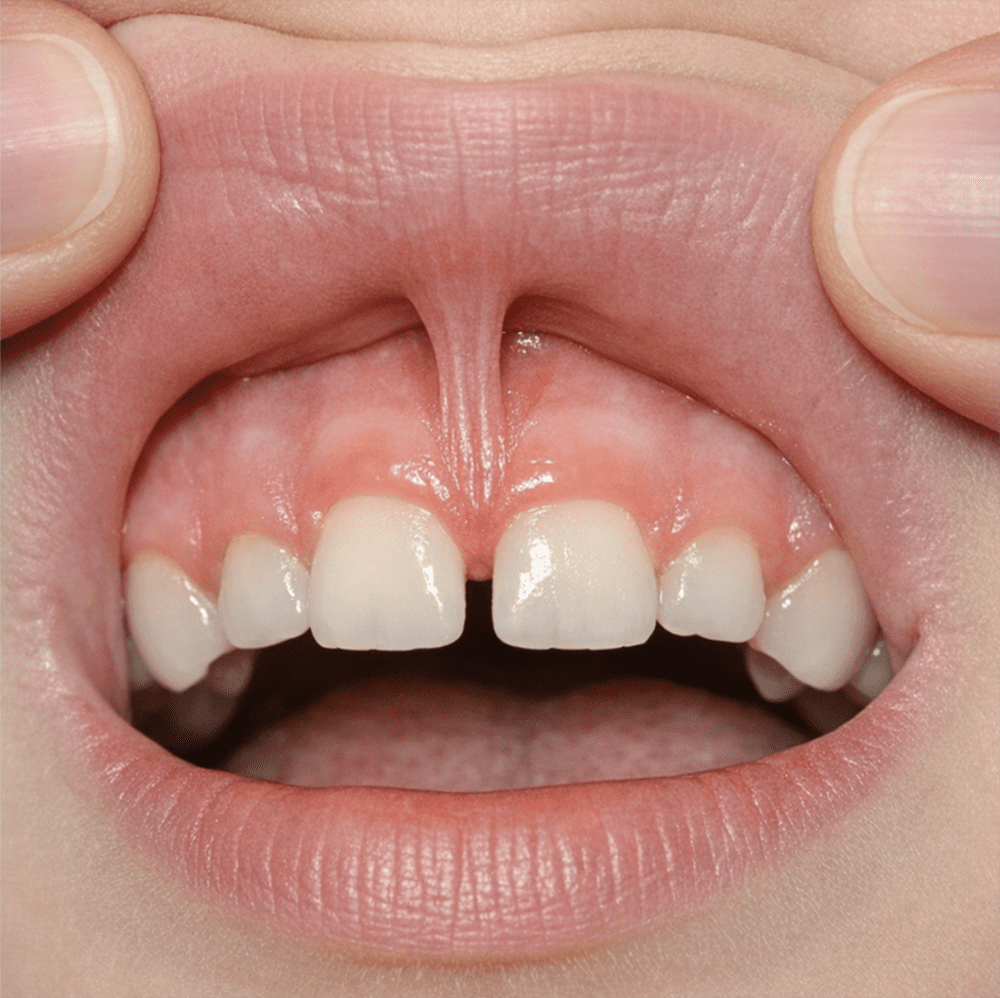
A lip tie often appears as a thick band of tissue stretching from the upper lip to the gums. When the lip is lifted, the tissue may look tight or pull on the gum tissue between the front teeth.
In some cases, the tight frenum can contribute to a gap between the upper front teeth, known as a diastema. Not every gap is caused by a lip tie, but a low or tight attachment can play a role in keeping the teeth separated.
Appearance alone does not determine whether treatment is needed. The key factor is whether the tissue limits movement or causes ongoing strain.
Does a Lip Tie Need to Be Fixed?
Not every lip tie needs treatment. Many children and adults have a visible frenum that does not interfere with oral health.
Lip tie treatment is considered when the tight tissue causes problems. These may include:
- Difficulty with breastfeeding or bottle feeding
- Tension along the upper gums
- Trouble cleaning near the gumline
- A persistent gap between the front teeth, known as a diastema
- Orthodontic evaluation showing that a tight frenum may affect spacing or long-term stability
- Discomfort when lifting or moving the upper lip
In orthodontic cases, the presence of a lip tie does not always mean a frenectomy is required. The decision depends on how the frenum attaches, the size of the diastema, and the overall treatment plan. A coordinated evaluation helps determine whether releasing the tissue would support alignment or stability.
When a Frenectomy Is Recommended for a Lip Tie
A frenectomy for a lip tie may be recommended when the tight upper frenum limits movement and contributes to ongoing problems. The goal of treatment is to release the restricted tissue so the lip can move more freely and reduce strain on the gums.
The decision to proceed is based on symptoms, dental development, and function. At Adara Surgical Institute, coordination with a myofunctional therapist or speech pathologist is required before and after surgery to support proper mobility and healing. Most children tolerate the procedure well and experience only mild soreness during recovery.
Supporting Healthy Development
If you are concerned about a lip tie or have been advised to consider a frenectomy for a lip tie, a clinical evaluation can determine whether treatment is appropriate.
To book a consultation at our oral surgery office in Issaquah, WA, call (425) 428-5888 or visit us at 6505 226th Pl SE STE #100 Issaquah, WA.
FAQs
How is a frenectomy performed?
At Adara Surgical Institute, a frenectomy for a lip tie is performed using a soft tissue laser. The laser precisely releases the tight frenum while minimizing bleeding and supporting a controlled healing process.
Is an upper lip frenectomy painful?
Local anesthesia is used to keep the area comfortable during the procedure. Most patients experience only mild soreness afterward, which typically resolves within a few days.
How long does an upper lip frenectomy take to heal?
Initial healing of the gum tissue typically occurs within the first one to two weeks. Complete healing and tissue remodeling usually take about two to four weeks, depending on the patient’s age and how the body responds to treatment.